When you buy a new launch condo, the single most important number you almost never see on the brochure is the price the developer paid for the land. That figure — the land rate, expressed in dollars per square foot per plot ratio (psf ppr) — sets the floor under everything that follows: construction, marketing, financing, profit, and ultimately your selling price. So when Thomson Reserve (the former Thomson View) secured its site at roughly S$1,178 psf ppr, it quietly handed buyers one of the most interesting value stories in the current market.
Here’s why: that land rate comes in below almost every recent suburban (OCR) land deal — despite Thomson Reserve sitting in a far more central, MRT-doorstep location. This article breaks down what that number means, how it stacks up against recent launches, and — just as importantly — what it does and doesn’t tell you as a buyer.
What “S$1,178 psf ppr” Actually Means
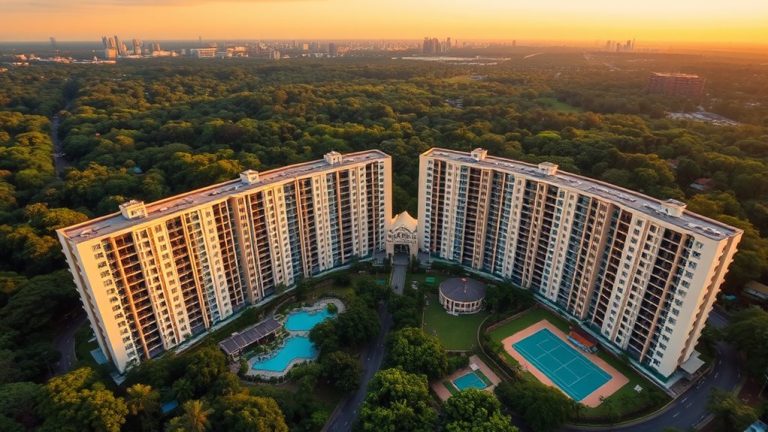
Thomson Reserve rises from the former Thomson View Condominium, which was acquired through a collective sale of S$810 million to the consortium of UOL Group, Singapore Land (SingLand) and CapitaLand Development — one of the largest en bloc deals of its year.
That S$810 million headline isn’t the whole land cost, though. The widely reported land rate of about S$1,178 psf ppr is the all-in figure — it includes the lease upgrading premium (to top the site back up to a fresh 99-year lease) and the land betterment charge for intensifying the site’s use. In other words, it already accounts for the extra payments a developer must make on top of the purchase price. That’s the number worth comparing against other land deals, because it’s measured on the same basis.
Quick definition: “psf ppr” is the land cost spread across the maximum floor area the site is allowed to build (its gross floor area). It’s the cleanest way to compare one land deal to another, regardless of plot size.
How Thomson Reserve’s Land Cost Compares to Recent Launches
Singapore’s residential market is split into three broad segments: OCR (Outside Central Region, the suburbs), RCR (Rest of Central Region, the city fringe), and CCR (Core Central Region, prime districts). Land prices generally climb as you move from OCR toward CCR. Thomson Reserve, on the central fringe near the nature reserve, is best understood as an RCR-quality location.
Here’s how its land rate sits against recent land deals across all three segments:
| Segment | Site | Land rate (psf ppr) |
|---|---|---|
| OCR | Chuan Grove | $1,331 & $1,376 |
| OCR | Bedok Rise | $1,330 |
| OCR | Lentor Central | $1,278 |
| OCR | Hougang Central | $1,179 |
| RCR | Dover Drive | $1,556 |
| RCR | Kallang Close | $1,415 |
| RCR | Telok Blangah | $1,326 |
| RCR | Thomson Reserve (former Thomson View) | $1,178 |
| CCR | Bukit Timah Rd (Newton) | $1,820 |
| CCR | Dunearn Road | $1,625 |
Read that table again slowly. Thomson Reserve’s $1,178 psf ppr is lower than every OCR site listed — including Lentor Central, Bedok Rise and Chuan Grove — and it’s hundreds of dollars below comparable RCR plots like Dover Drive and Kallang Close. The only land deal close to it is Hougang Central at $1,179, a suburban mixed-use site that, interestingly, was also won by a UOL–CapitaLand consortium.
Why a Lower Land Cost Matters to You as a Buyer
Land is the largest single cost in a new launch, so the rate a developer pays shapes the pricing maths from day one. A lower land cost gives the developer more room to price competitively at launch while still hitting its margin — and it sets a lower cost base that tends to support healthier long-term value.
Think of it as the difference between two restaurants on the same street. If one pays half the rent of the other, it can charge less for the same dish and still make money. A developer that bought land cheaply has a similar advantage — and in a launch, that advantage can show up as keener pricing for early buyers.
The other angle is resale benchmarking. When a project enters the market at a sensible price relative to its location, future buyers and valuers have a reasonable reference point, which supports liquidity down the line.
The Real Headline: RCR Location, Below-OCR Land Cost
What makes Thomson Reserve unusual isn’t just the number — it’s the mismatch between the number and the location. You’re paying a land cost that undercuts the suburbs, for a site that’s a 2–3 minute walk to Upper Thomson MRT, one stop from the Circle Line at Caldecott, beside the Central Catchment Nature Reserve, and within 1km of Ai Tong School.
That combination — central-fringe connectivity and a top-school catchment, secured at a suburban land price — is the core of the investment case. For the full picture of how connectivity, schools and nature stack up, see why Thomson Reserve is one of the most complete new launches in District 20.
What This Doesn’t Mean (An Honest Caveat)
A low land cost is a strong starting point, not a guarantee. It’s worth being clear-eyed about the limits:
- Land cost is not selling price. Final launch prices depend on construction costs, financing, market conditions at launch, and the developer’s pricing strategy.
- The comparison figures are approximate. They’re drawn from reported land bids and collective-sale rates, and a couple of the comparison sites are mixed-use, so they’re a guide rather than a perfect like-for-like.
- Markets move. A favourable land cost helps, but no one can promise capital appreciation.
None of this is financial advice — just the context you need to ask the right questions. The point is simply that Thomson Reserve enters the conversation with a genuinely favourable cost base, which is a good place for any project to start.
WhatsApp Us About Thomson Reserve Pricing
Frequently Asked Questions
What was Thomson Reserve’s land price?
The former Thomson View site was acquired for S$810 million, translating to a land rate of approximately S$1,178 psf ppr inclusive of the lease upgrading premium and land betterment charge.
Is Thomson Reserve OCR or RCR?
Thomson Reserve sits on the central fringe in District 20, near the Central Catchment Nature Reserve, and is best understood as an RCR (Rest of Central Region) location — yet its land rate came in below recent OCR suburban sites.
Does a lower land cost mean a cheaper condo?
Not automatically. A lower land cost gives the developer more room to price competitively and sets a lower cost base, but the final launch price also depends on construction costs and market conditions. Contact us for the latest indicative pricing.
Land rates are approximate and based on reported land bids and collective-sale rates for general comparison only; some comparison sites are mixed-use. Thomson Reserve’s land rate (~S$1,178 psf ppr) is inclusive of the lease upgrading premium and land betterment charge. This article is for general information and is not financial advice. All figures are subject to confirmation and may change without notice.